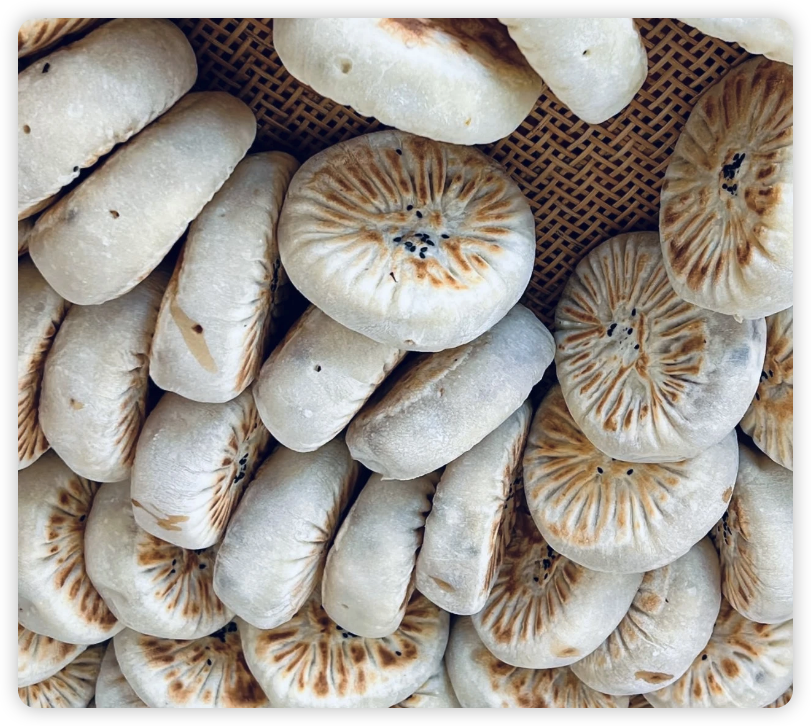
This weekend I ate two local dishes I’ve been eating my whole life — 肉麦饼 (rou mai bing, pork-stuffed flatbread) and 小麦饼 (xiao mai bing, wheat pancake). Delicious as always. And then, for the first time, I really looked at them and realized something strange:
The best food in my hometown is all designed to send you out the door.
It’s not a new observation — the thought had crossed my mind before. But this time it clicked, and the more I thought about it, the more the town’s whole food culture made sense. Here’s what I mean.
The Three Foods That Refuse to Go Bad
1. 肉麦饼 (pork flatbread) / 方饼 (square cake). A griddled flatbread stuffed with minced pork. The key detail: once baked, it stays good for days. It’s perfectly edible cold. If you’re heading out on a trip, you bake a stack, and you have food for the whole journey.
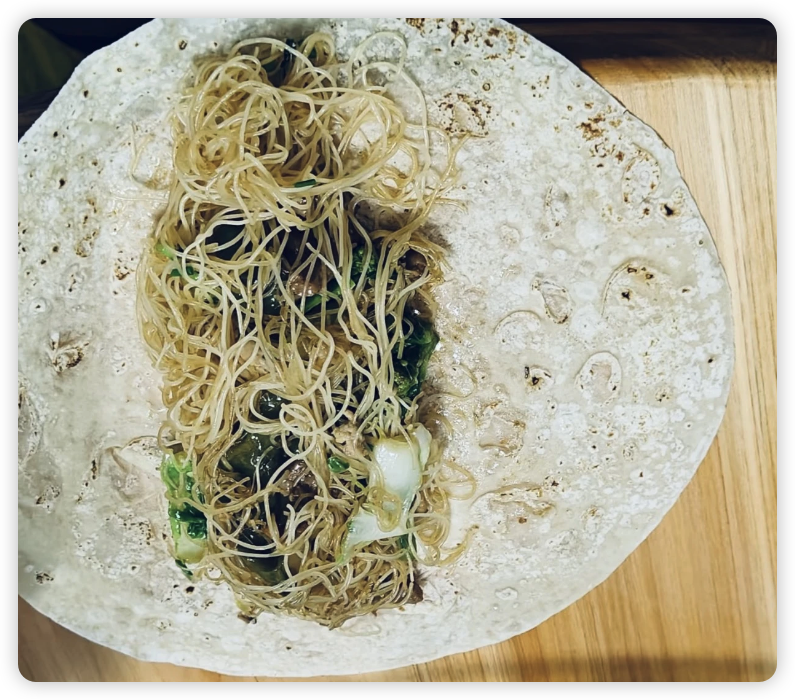
2. 小麦饼 (wheat pancake). A thin, chewy wheat pancake that “wraps everything” — vegetables, meat, leftover anything. It’s a ready-made ration. And if you truly have nothing to wrap, you just eat it plain, dry. It’s a carbohydrate sheet that never complains.
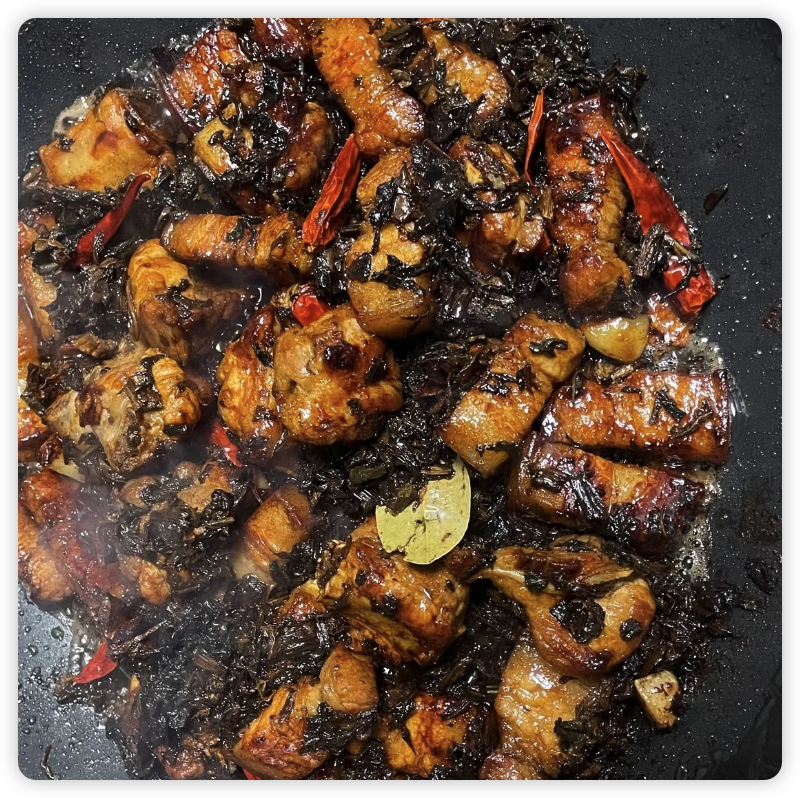
3. 梅干菜 (mei gan cai, preserved mustard greens). Nowadays we always cook it with pork. But in the old days, you didn’t need the pork: grab a handful of the preserved greens, stuff it in a jar, and head out. Sprinkle it over plain rice and you have a meal. Pour hot water over it and you have soup and rice in one bowl. It needs no fridge, no cooking, no skill.
Why Did a Town’s Food Become Travel Food?
Because the town was built for leaving.
Yongkang is in Zhejiang, and it’s not a lucky farming town: too many mountains, too little flat land, and not enough farmland for everyone. Historically, the people of Yongkang didn’t get rich by farming — they got rich by leaving. The town is famous as China’s hardware capital, and for generations its craftsmen — blacksmiths, locksmiths, tinkers — traveled across the country with their tools, fixing and selling in villages far from home.
And when you travel for months with only what you can carry, you can’t rely on restaurants. So the food culture adapted in the most practical way possible: make everything durable, portable, and edible without a kitchen.
A wheat pancake in your pack. White rice in your bag. A jar of preserved greens on top. Boil some water, and there’s dinner — in a railway station, a stranger’s town, or a half-built workshop far from home.
It’s food designed by pragmatism. Food that says: go, and don’t worry about your next meal.
Why This Matters Today
The era of wandering craftsmen is mostly gone. Yongkang kids today eat these foods the way I did this weekend — at home, at a table, for pleasure. But the food still carries its history. When you bite into a pork flatbread that could survive three days in a saddlebag, you’re tasting the reason the town exists.
Food remembers what people forget.
FAQ: Yongkang Food and Chinese Travel Food Culture
What is 肉麦饼 (rou mai bing)?
A griddled flatbread stuffed with minced pork, a specialty of Yongkang in Zhejiang. It stays edible for days and can be eaten cold — originally made for travelers.
What is 梅干菜 (mei gan cai)?
Preserved mustard greens, a common ingredient across China. In Yongkang it was traditionally a portable ration: sprinkle over rice or add hot water for a quick meal when traveling.
Why is Yongkang famous?
Yongkang is known as China’s “hardware capital” — historically, its craftsmen traveled across the country working as blacksmiths, locksmiths, and tinkers, which shaped both the economy and the food culture.
What Chinese foods are good for travel?
Flatbreads, dried noodles, preserved vegetables (like mei gan cai), salted duck eggs, and dry-cured sausages all keep well without refrigeration — staples of Chinese “travel food.”
Over to You
Does your hometown have food designed for the road? You know the kind — food that keeps for weeks, needs no fridge, and was clearly invented by people who had somewhere else to be?
I’m genuinely curious what your version of a travel ration looks like.
— Ying