Today I ordered lunch on the food delivery app and tried a new place for a change — a hotel restaurant (yes, an actual hotel that does takeout). And the moment I opened the box, I had one of those small but very clear thoughts:
So THIS is what 18 RMB can buy when a real kitchen is doing the cooking.
Let me show you what I mean. Same town, same delivery fee, nearly the same price — and the gap in quality was honestly embarrassing.
Three Takeout Boxes, Nearly the Same Price
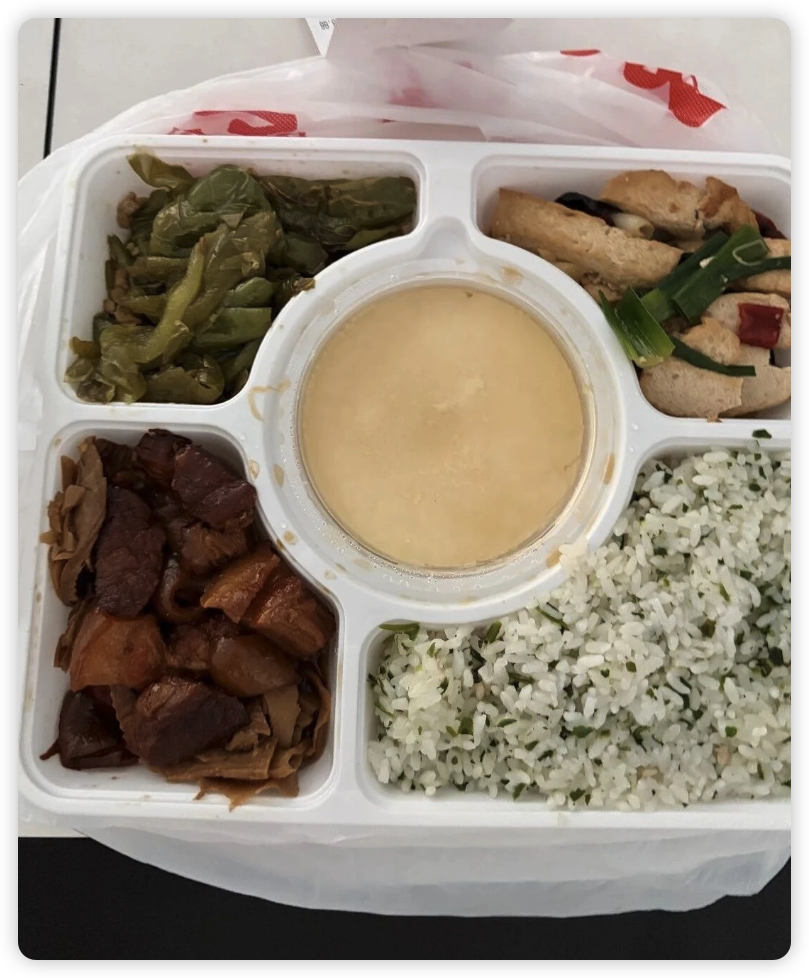
Box 1 — today, from the hotel restaurant: 18.88 RMB (~$2.80). A proper little meal: rice cooked with greens, braised pork with dried bamboo shoots, stir-fried green peppers with tofu, and a steamed egg custard on the side. Four components, each one clearly cooked by someone who cared. This is what I’d call a “standard” takeout in our town — and it’s also about the price floor for anything edible.
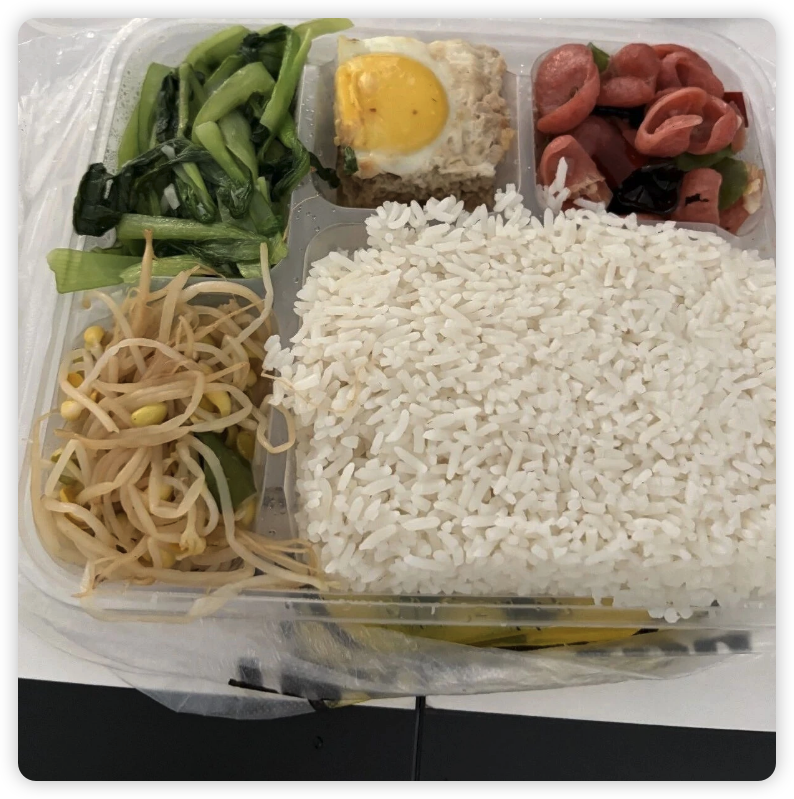
Box 2 — a previous order from a canteen-style place: 17.8 RMB (~$2.65). This is what “large cafeteria” cooking looks like in a box: one big mound of rice, bean sprouts, leafy greens, and some steamed egg with a bit of minced meat on top. One yuan cheaper than Box 1 — and it tasted like it was ten yuan cheaper.
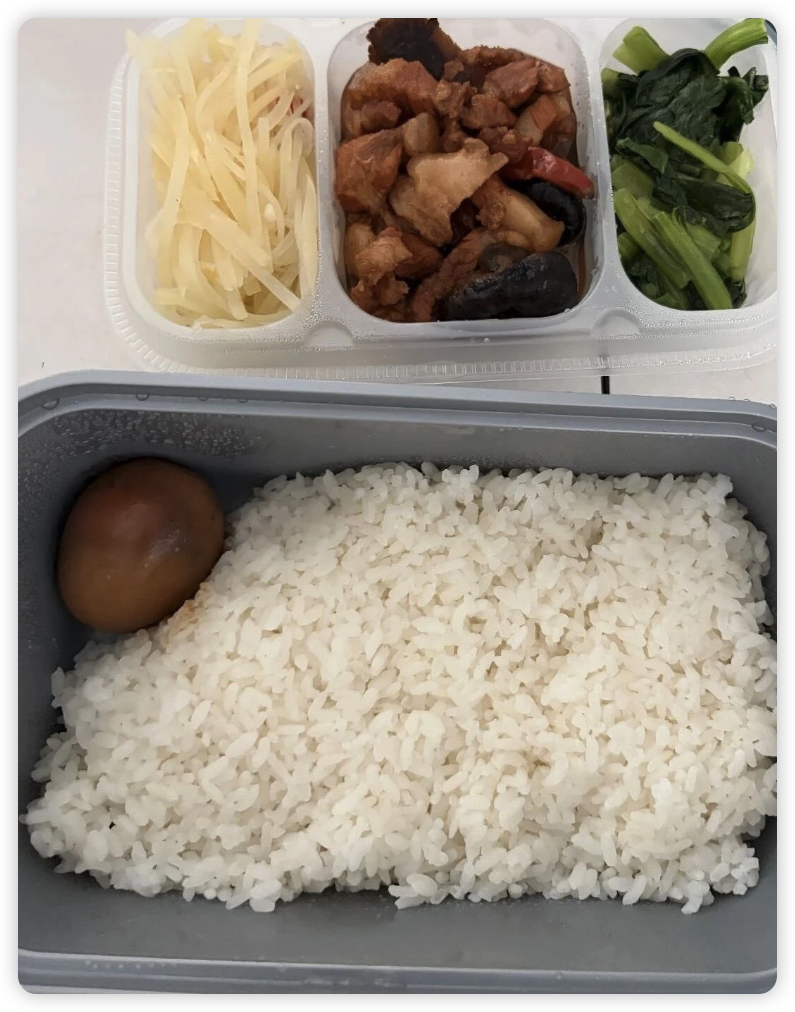
Box 3 — a local “rustic kitchen” restaurant, eaten in person: the most expensive, the smallest portion. Not bad, just… nothing special. The kind of place that charges restaurant prices for canteen quantities.
Why a Hotel Crushed the Cheap Places at the Same Price
I keep thinking about why Box 1 was so much better. It’s not mystery — it’s infrastructure:
- A real kitchen with real cooks. Hotels run full restaurants with professional chefs who actually know how to braise pork and balance a meal. A canteen kitchen is built to shovel out volume.
- The hotel is selling its reputation. A hotel doing takeout is trying to build a name in delivery; the cheap joints are just fighting for the cheapest price point.
- “Dimensional reduction strike.” There’s a Chinese internet term for this — 降维打击, literally “attacking from a lower dimension.” When a professional operation shows up in a market full of amateurs, it’s not a contest. It’s a massacre.
And the beauty is: consumers vote with their feet. Same price, better food — everyone’s downloading that hotel app.
The Economics of 18 RMB Takeout in a Small Chinese Town
Food delivery in Chinese county towns runs on a brutal price floor. In our town, 18–20 RMB is basically the minimum for a real meal — anything cheaper, and you’re getting the kind of food that makes you feel bad about yourself.
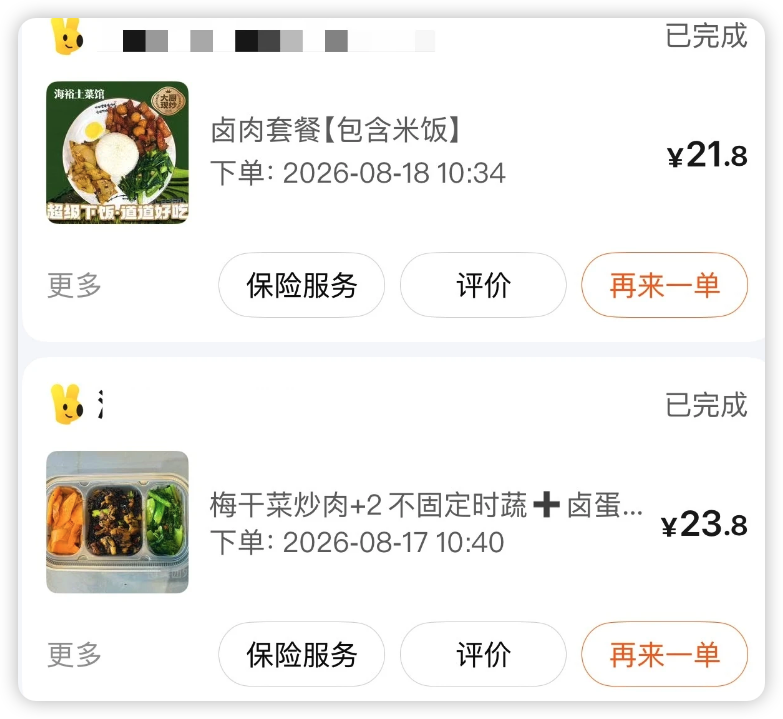
For comparison: in big cities like Shanghai or Shenzhen, that same order runs 25–40 RMB (~$3.70–5.90). The county-town prices aren’t “cheap” so much as locally priced — wages are lower, rent is lower, and the apps push vendors to keep menus near the floor.
FAQ: Takeout Prices in China
How much does takeout cost in China?
In small county towns, a meal delivery typically costs 18–25 RMB ($2.70–3.70). In big cities like Shanghai or Beijing, expect 25–40 RMB ($3.70–5.90) for the same kind of meal, plus delivery fees.
What food delivery apps does China use?
Meituan (美团) and Ele.me (饿了么) dominate the market, offering everything from street food to hotel restaurant meals — often with delivery fees under 5 RMB in small towns.
Is it cheaper to eat out or order delivery in China?
In small towns, delivery is usually comparable to eating at cheaper restaurants once you account for time. Restaurant-quality delivery at the same price as canteen food is common — if you know which places to order from.
Why is Chinese takeout so cheap?
Low wages, low rent, high restaurant density, and fierce app competition push prices down. Meal delivery in small towns is priced for volume, not margin.
Over to You
Same 18 RMB in your town: restaurant takeout or street canteen food? And for readers outside China — what does an average delivery meal cost where you live?
I’m genuinely curious how our $2.80 stacks up against your town’s lunch prices.
— Ying