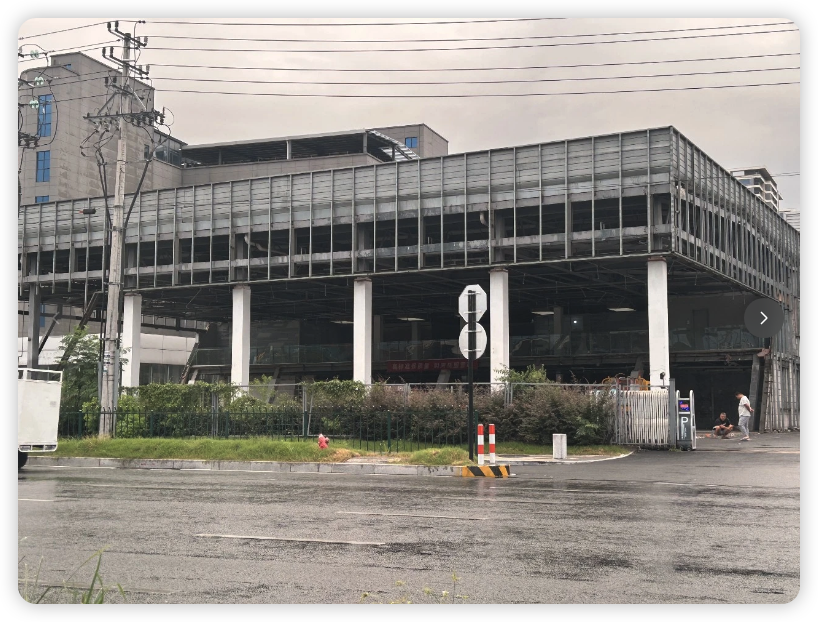
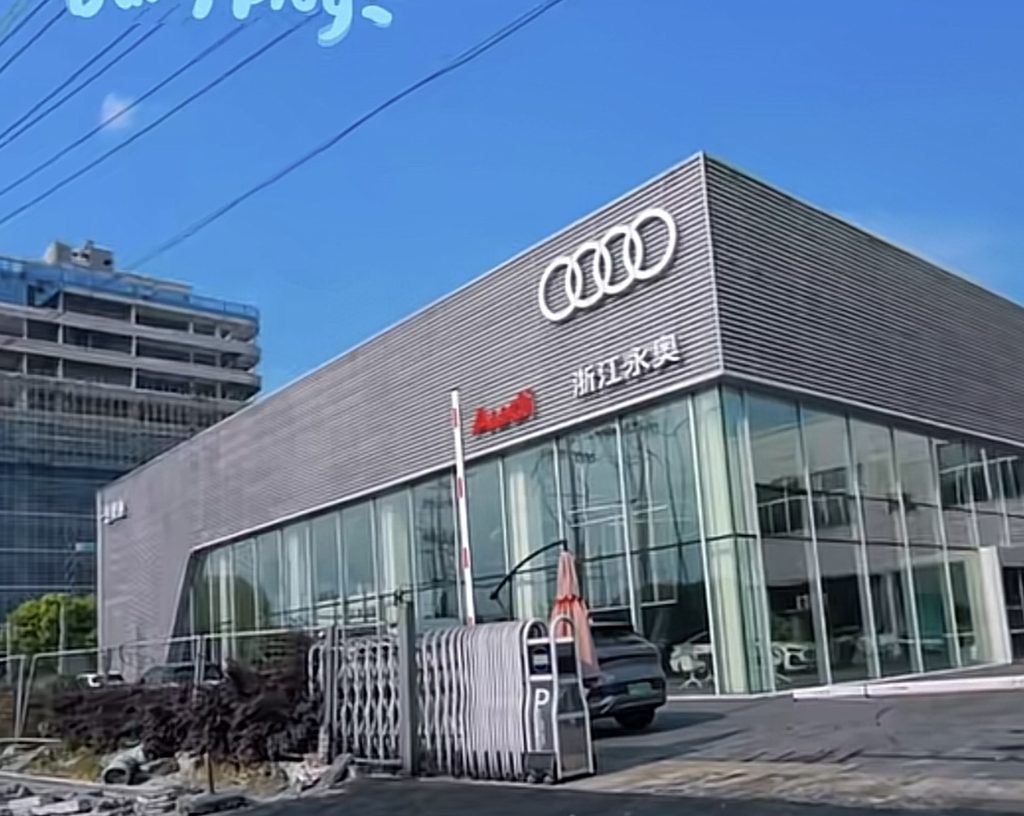
Driving home from work the other day, I passed Garden Avenue and saw the Audi dealership being torn down. Sixteen years ago, when it opened, it was the first Audi 4S store our town had ever seen. A week earlier, the space had been turned into a NIO showroom for a while — and now the whole building is coming down for a rebuild.
The short version of why: Audi’s era in small-town China is ending. In 2025 alone, more than ten Audi dealerships across China have shut down or left the network. When you can’t sell the cars, you close the doors — or switch to selling electric.
The Story of One Dealership, From 2010 to Now
This particular shop opened in 2010, in Yongkang — the county-level city where I live in Zhejiang. It sat on Garden Avenue for a simple reason: the vehicle administration office is right there, so every new car owner in the county passes by to register their plates. Clever location. It worked for over a decade.
I remember it well because I walked into that showroom in 2016, when I was buying my first car. I browsed, I sat in the driver’s seat, I dreamed a little — and then I looked at the price tag and left empty-handed. The Audi A4 on that floor was 300,000 RMB (~$44,000). That was out of reach for me then, and for most people in our town.
Now? The entry-level Audi A3 has dropped to around 150,000 RMB (~$22,000) — and even that isn’t enough to pull buyers in.
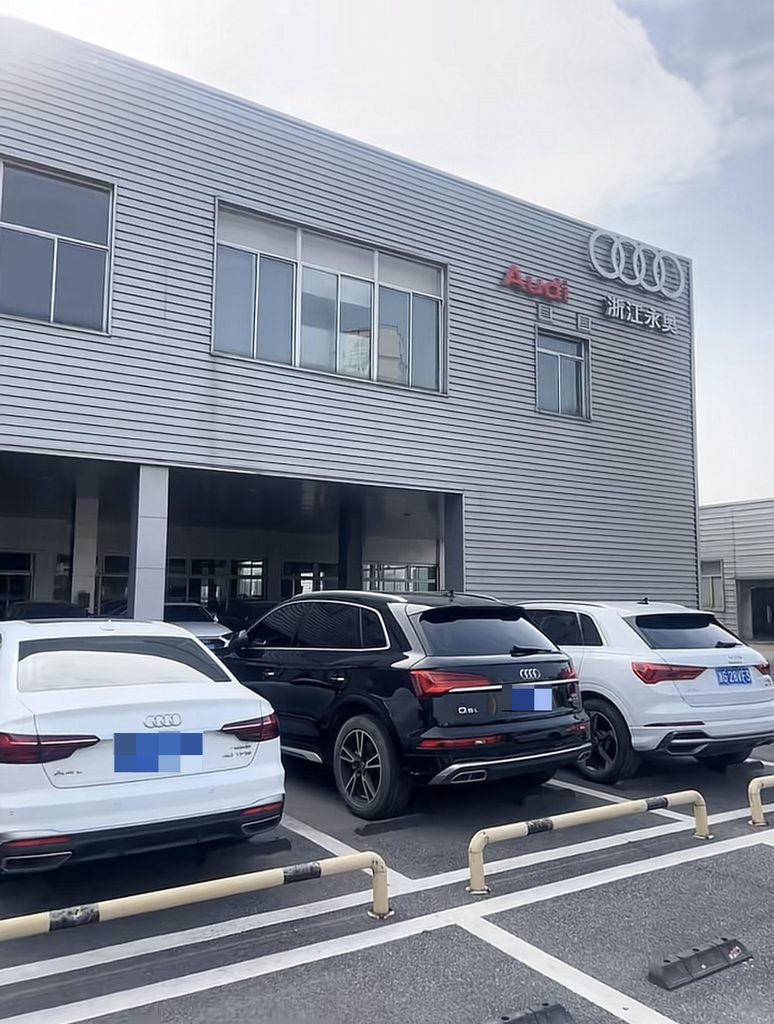
Audi Was Our Generation’s “White Moonlight”
For people born in the 90s in China, Audi — along with BMW and Mercedes, the “BBA” trio — was the white moonlight: the dream car you aspired to. In the 2000s and 2010s, if someone in your circle bought a BBA, that was real success. A black Audi A6 outside a company building meant the boss had made it. We grew up believing that owning one of the three German badges was the finish line.
That belief carried Audi through nearly two decades of easy sales.
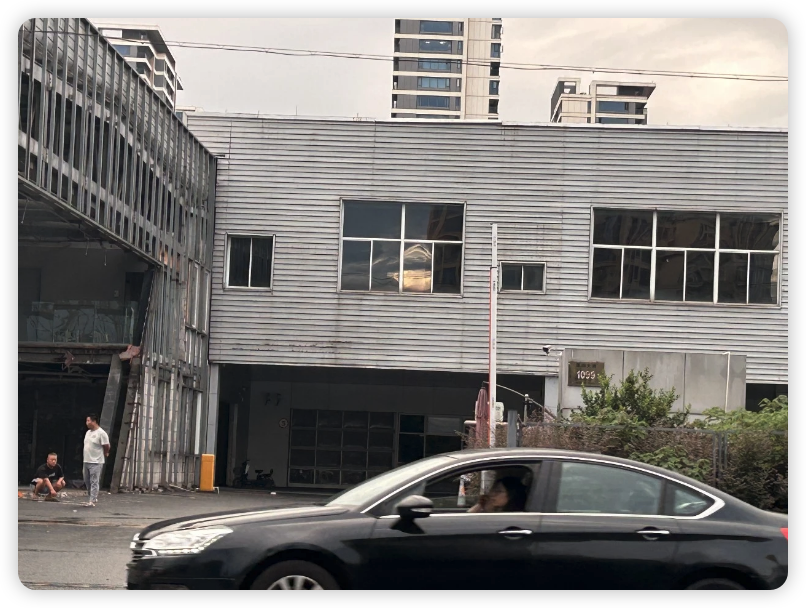
What Changed: NIO, XPeng, Li Auto — and a New Definition of Success
Fast forward to today, and the finish line has moved. Ask a young buyer in China now which car they dream of, and the answers sound completely different: 蔚来 (NIO), 小鹏 (XPeng), 理想 (Li Auto) — the “NIO-XPeng-Li” trio that replaced BBA as the status symbol of the electric era. Nobody at the dealership next door is waiting in line for a gas Audi anymore.
The numbers tell the story: from 2025 to now, over ten Audi 4S dealerships across China — in multiple provinces — have closed or quit the network. When inventory doesn’t move, a dealer has two options: leave the network entirely, or switch to selling EVs. Many are choosing the second one. (Fun detail from my town: this very building briefly became a NIO showroom before the demolition — even the old Audi building wanted to sell electric.)
What This Actually Means
It’s tempting to read this as “German cars are bad now.” It’s not that — it’s that the definition of a great car changed faster than the dealership model could follow. Software, charging, smart driving, design that feels local: that’s what buyers in small cities want now, and the traditional 4S model — one brand, one building, one network — is struggling to keep up.
Markets accelerate, and the only choice is to change with them. Even for those of us who grew up with a German badge as the dream.
FAQ: Audi Dealerships and BBA Decline in China
Is Audi losing market share in China?
Yes. Audi and other traditional luxury brands (BMW, Mercedes) have been losing ground to Chinese electric brands like NIO, XPeng, and Li Auto. Multiple Audi dealerships closed or left the network in 2025.
Why are German luxury cars declining in China?
Chinese buyers increasingly value smart driving, software, and EV technology — areas where Chinese brands lead. German brands’ gas-powered legacy models struggle to compete at the same price points.
What are “BBA” and “NIO-XPeng-Li”?
“BBA” is Chinese slang for BMW, Benz (Mercedes), and Audi — the old luxury trio. “蔚小理” (NIO, XPeng, Li Auto) is the new trio of Chinese electric brands that young buyers now aspire to.
What is a 4S dealership?
A 4S store is the Chinese dealership model: Sale, Spare parts, Service, and Survey (4 “S” words) all under one roof, per brand. The model is being challenged by EV makers who prefer direct sales and showrooms in malls.
Over to You
Is there a shop or dealership in your town that ran for years and then suddenly disappeared? What does the story of your local version of this change look like?
I’d love to compare notes on how the car business is changing where you live.
— Ying