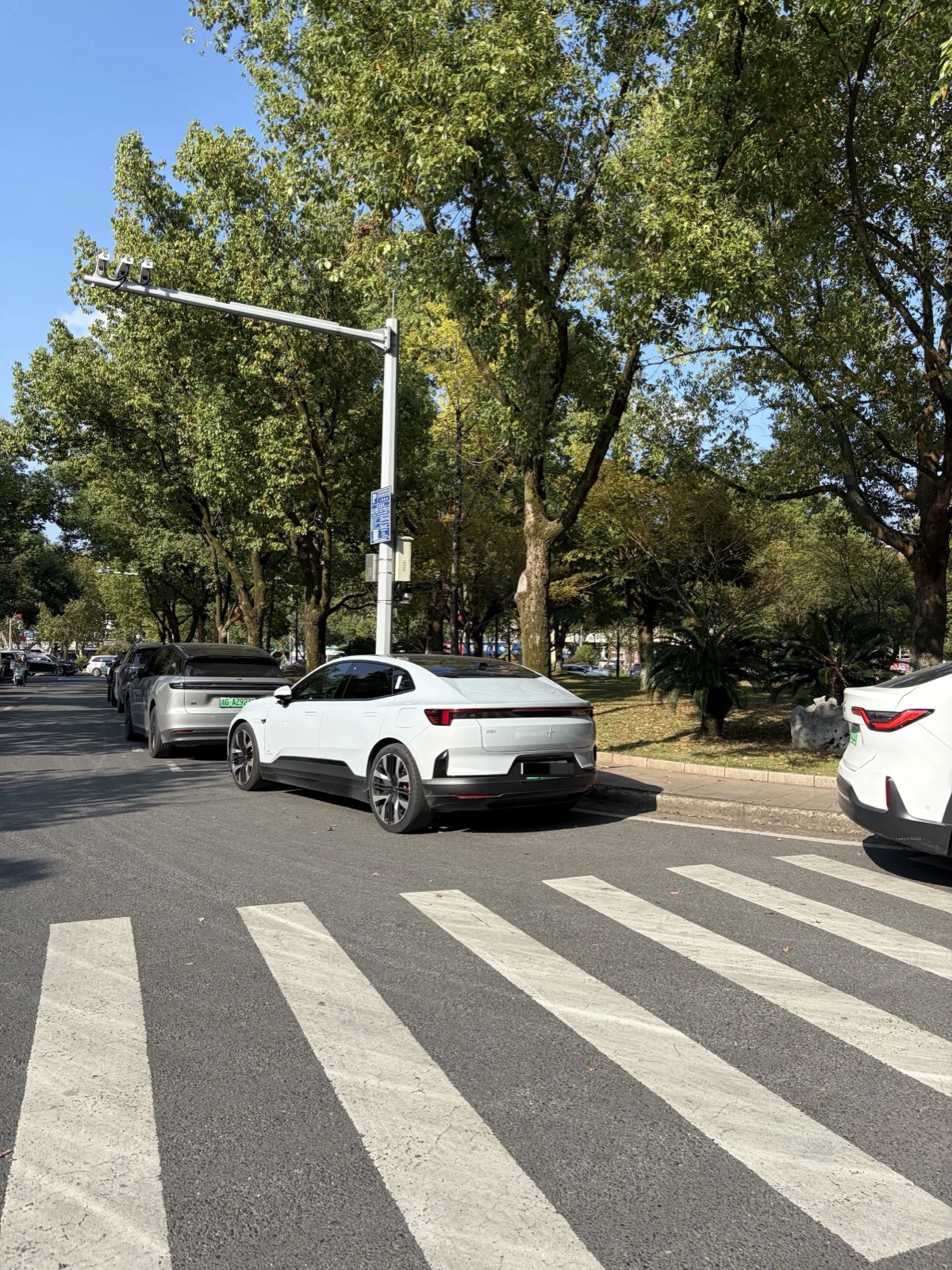
On a bright morning in October I stopped at a zebra crossing in the middle of Yongkang and found myself looking at the back of a car I had only ever seen in photographs.
White, low, a single continuous light bar across the tail, and a small badge on the right of the boot lid that said 极星 4 — Polestar 4. The green new-energy plate was a Zhejiang one. A driver was waiting for the light to change, entirely unbothered, as though the rarest new car in the county was not sitting in front of him.
I took a photo, then another. I walked around it while it was parked. I was that person.
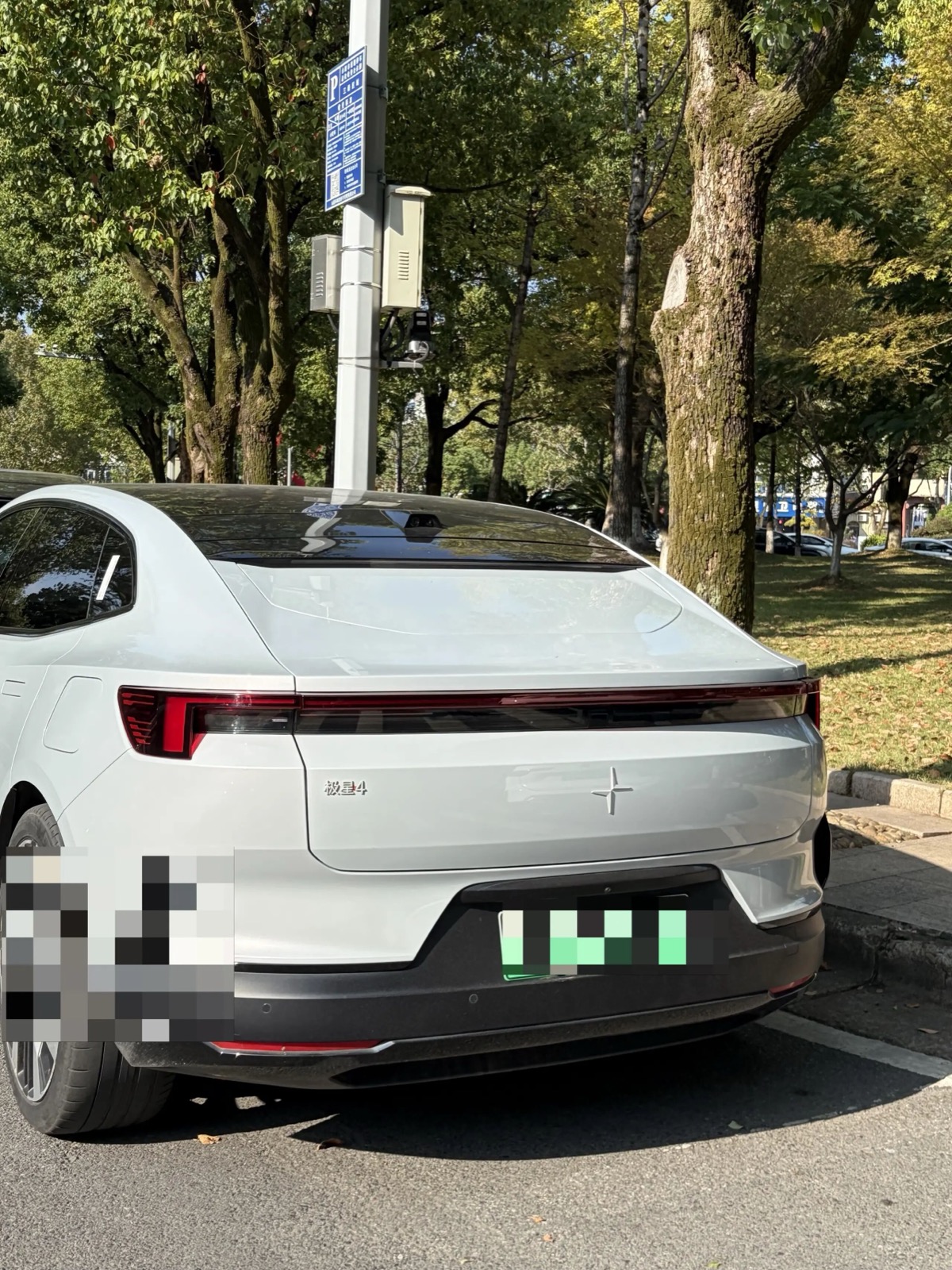
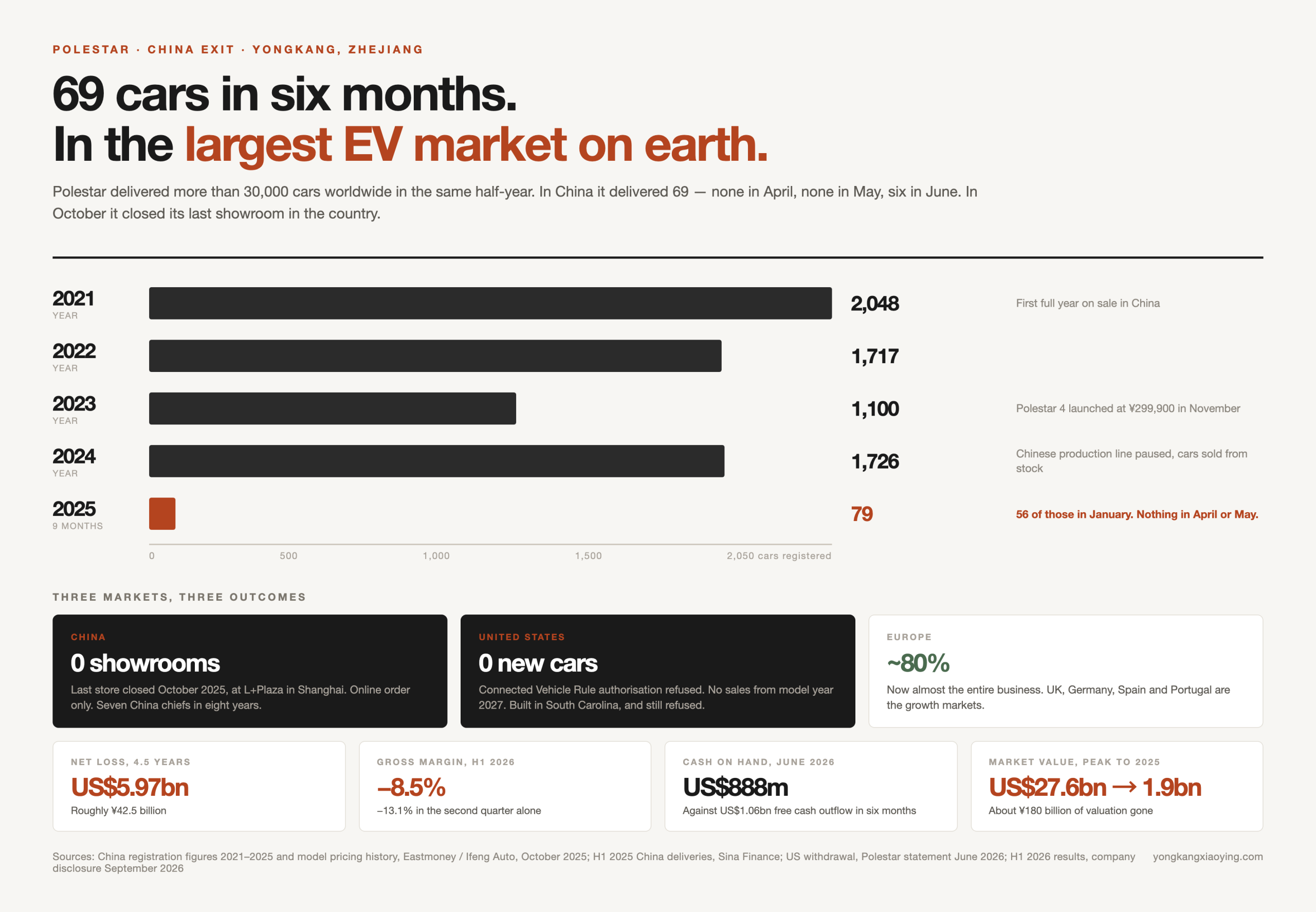
The reason is not that the Polestar 4 is a spectacular car, although it is a striking one. The reason is arithmetic: Polestar sold 69 cars in the whole of China in the first half of 2025. In April and May of that year it delivered zero. In June it delivered six.
Sixty-nine cars, in a market that registered something north of 15 million new energy vehicles in the same twelve months. Whatever the exact denominator, the share is not a percentage point — it is a rounding error on a rounding error. Seeing one parked at a crossing in a county-level city of a million people is closer to spotting a specific bird than to spotting a car.
The brand that arrived with a corporate pedigree and left with none
Polestar’s Chinese story began with the best possible backing. It was Volvo’s performance division before Volvo and Geely turned it into a standalone electric brand, which meant it started with Swedish design credibility, Chinese manufacturing capacity and Geely’s supply chain all at once. Chinese motoring press called it a 车圈富二代 — a rich kid of the car world.
The product history reads like a series of strategic restarts:
| Model | On sale in China | Launch price | What happened |
|---|---|---|---|
| Polestar 1 | 2019 | ¥1,450,000 | Limited to 100 units a year; a halo car, not a business |
| Polestar 2 | 2020 | ¥418,000, cut to ¥298,000 one month later | The price cut defined the brand’s reputation |
| Polestar 3 | 2023 | ¥698,000 | Fewer than 200 sold in its first half-year |
| Polestar 4 | Nov 2023 | ¥299,900 | 中国产线 paused March 2024; sold from stock |
The Polestar 4 was the last attempt, and it was explicitly framed that way in the Chinese press — a 最后一搏, a final push back into the ¥300,000 bracket. It went on sale on 16 November 2023 without lidar, at a moment when every local competitor at that price had lidar and a rear-seat screen and a fridge. By March 2024 the Chinese production line was paused and cars were being sold out of inventory.
In October 2025 the last remaining Polestar showroom in China closed — the store at L+Plaza in Qiantan, Shanghai. The company described it as a strategic adjustment to its China business model and said it would sell online, by order. Local reporting noted that remaining Polestar 4 stock was being cleared at close to half its ¥300,000-plus list price, and that servicing would be handled by authorised Volvo workshops.
The numbers behind the exit
The annual registration figures in China make the exit look less like a retreat and more like a mercy killing:
- 2021: 2,048
- 2022: 1,717
- 2023: 1,100
- 2024: 1,726
- 2025, first nine months: 79
Add those up and Polestar sold somewhere around 6,600 cars in China in five years, across four models, with a national retail network that peaked at several dozen stores and passed through seven different China chiefs in eight years.
Globally the picture was never as bad. In the first half of 2025 Polestar delivered more than 30,000 cars worldwide, up 51 per cent year on year, and its cumulative global sales for the Polestar 2 alone passed 373,000 units. The company’s own reporting and the Chinese financial press describe the same divergence: a brand growing in Europe and shrinking to nothing in the largest EV market on earth.
The losses, though, were global. Polestar lost roughly US$5.97 billion across four and a half years — about ¥42.5 billion — and its market value fell from a peak of US$27.6 billion at listing to under US$1.9 billion. In 2025 the company took a US$200 million equity injection from PSD Investment, an entity controlled by Geely’s founder Li Shufu, who now holds around 44 per cent of the company. Geely and Li together hold about 66 per cent.
Why the cars did not sell here
This is the part that is genuinely interesting, because Polestar was not a bad product. The Polestar 4 is a well-reviewed car in Europe. In China it was ignored, and the reasons are specific.
The product was defined in Sweden for somewhere else. Reporting on the exit quotes people close to the company saying that core R&D and product definition authority stayed in Sweden, and the main sales markets were overseas, which made it very hard to change a model’s definition to suit Chinese buyers. That is a polite way of saying the car was not built for this market and could not be re-built for it in time.
Nordic minimalism was read as poverty. Chinese buyers at ¥300,000 expect a screen configuration, a fridge, a reclining rear seat, lidar, and an interior that photographs well on a phone. Polestar offered a clean Scandinavian cabin and a performance chassis. Both are admirable. Neither is what the segment was buying in 2024.
The price never stopped moving. A brand that launches at ¥418,000 and cuts to ¥298,000 within a month teaches every subsequent buyer to wait. Polestar did this repeatedly: high launch, quick discount, then inventory clearance. By the end, the residual value story was so poor that the discount became the entire proposition.
And the parent company had better options. Geely’s own portfolio — Zeekr, Lynk & Co, Volvo, Galaxy — covers the same price bands with products designed in China for China. Polestar was competing with its own siblings for engineering attention and showroom space.
Then America closed too
In June 2026 Polestar announced it would withdraw from the United States. The US Department of Commerce’s Bureau of Industry and Security declined to grant the company an authorisation under the Connected Vehicle Rule, which restricts vehicles with software and hardware linked to China and Russia. From model year 2027, Polestar cannot sell new cars in America.
The detail that makes this strange: Polestar had already moved production to avoid exactly this. The Polestar 3 was being built in South Carolina, and the Polestar 4 in Busan, South Korea, through Renault Korea. It did not matter. Volvo, a sister brand under the same Geely ownership and with the same Chinese technology stack, received an exemption. Polestar did not, and US regulators have not publicly explained the difference.
So within eight months the company lost its retail presence in China and its right to sell in the United States. America was only about 6 per cent of Polestar’s volume, so the direct sales loss was small, but the restructuring cost was US$130 million booked in the first half of 2026 and an operating loss increase of roughly US$211 million in that business.
Europe is what is left, and it is now close to 80 per cent of the business. The financials in the first half of 2026 show what a company looks like when it is being compressed into one continent: revenue down 4.4 per cent to US$1.36 billion, gross margin at negative 8.5 per cent for the half and negative 13.1 per cent in the second quarter, US$888 million of cash against US$1.06 billion of free cash outflow in six months.
What happens to the car parked at the crossing
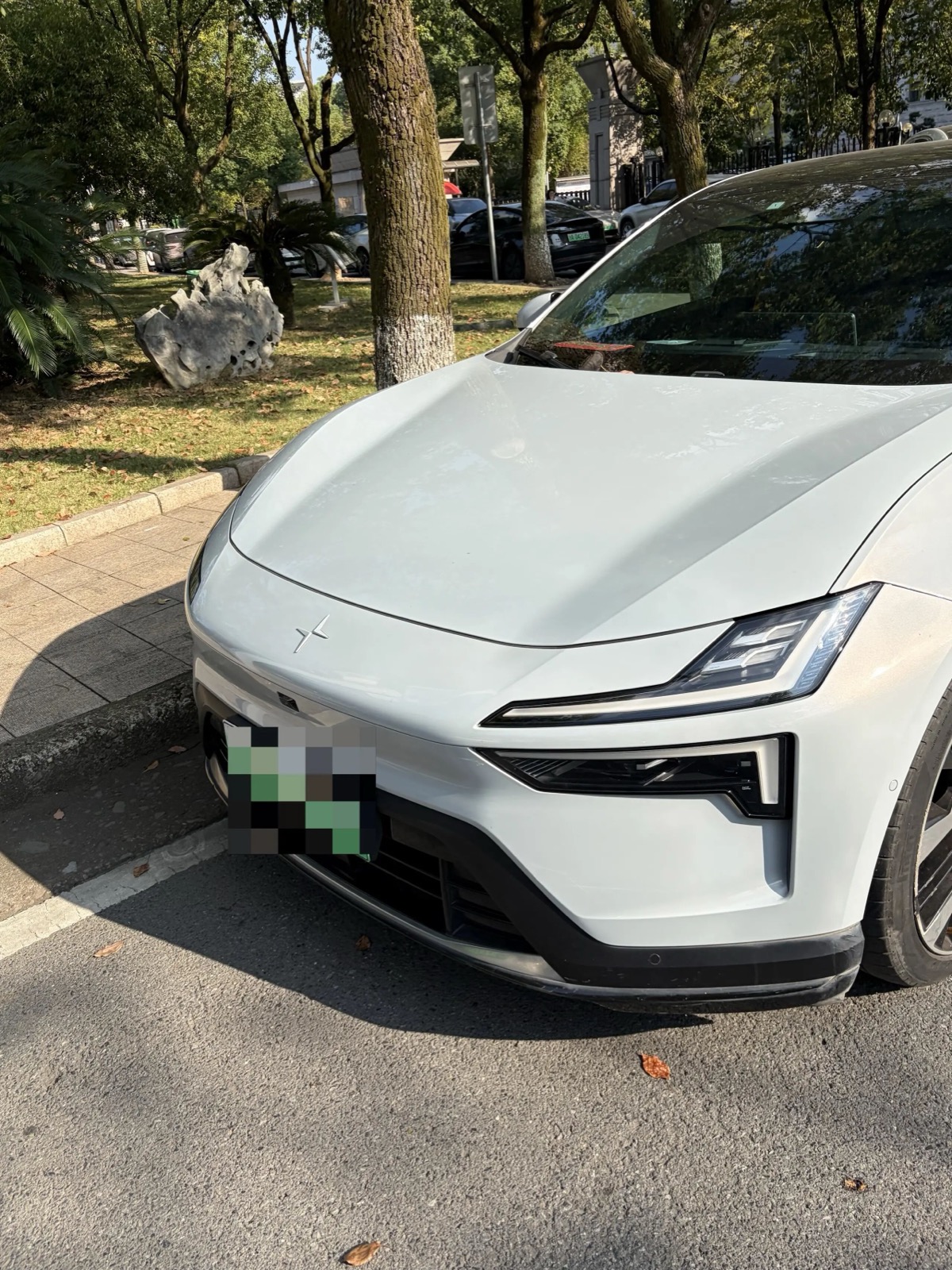
This is the question I actually could not stop thinking about, standing next to it.
A Polestar 4 in Yongkang in October 2026 is a car from a brand with no showroom in the country, no new-car sales channel, a model whose Chinese production line was paused two and a half years ago, and a parent company that has publicly reorganised around Europe. It is not abandoned — Polestar China has said owner rights are unaffected, and servicing runs through authorised Volvo workshops, which in a hardware town like mine is a real and competent network. Software updates and parts come from a company that still exists and still builds the car in Korea.
But the ownership experience has changed shape. The car is now a maintenance obligation to a distributor that has withdrawn, priced at whatever the second-hand market decides a discontinued model from an exiting brand is worth. If you are the kind of person who buys a car and keeps it for fifteen years, that is fine. If you are the kind of person who trades every four years, you have just discovered that the trade-in value of rarity is not the same as the trade-in value of demand.
There is also the quieter point. The Polestar 4 is a genuinely interesting piece of design — the coupe roofline without a rear window, the camera mirror, the light bar. It was built in Ningbo, 130 kilometres from where I was standing. It is one of the better electric cars to come out of this country, and almost nobody in this country bought one.
The car next to it
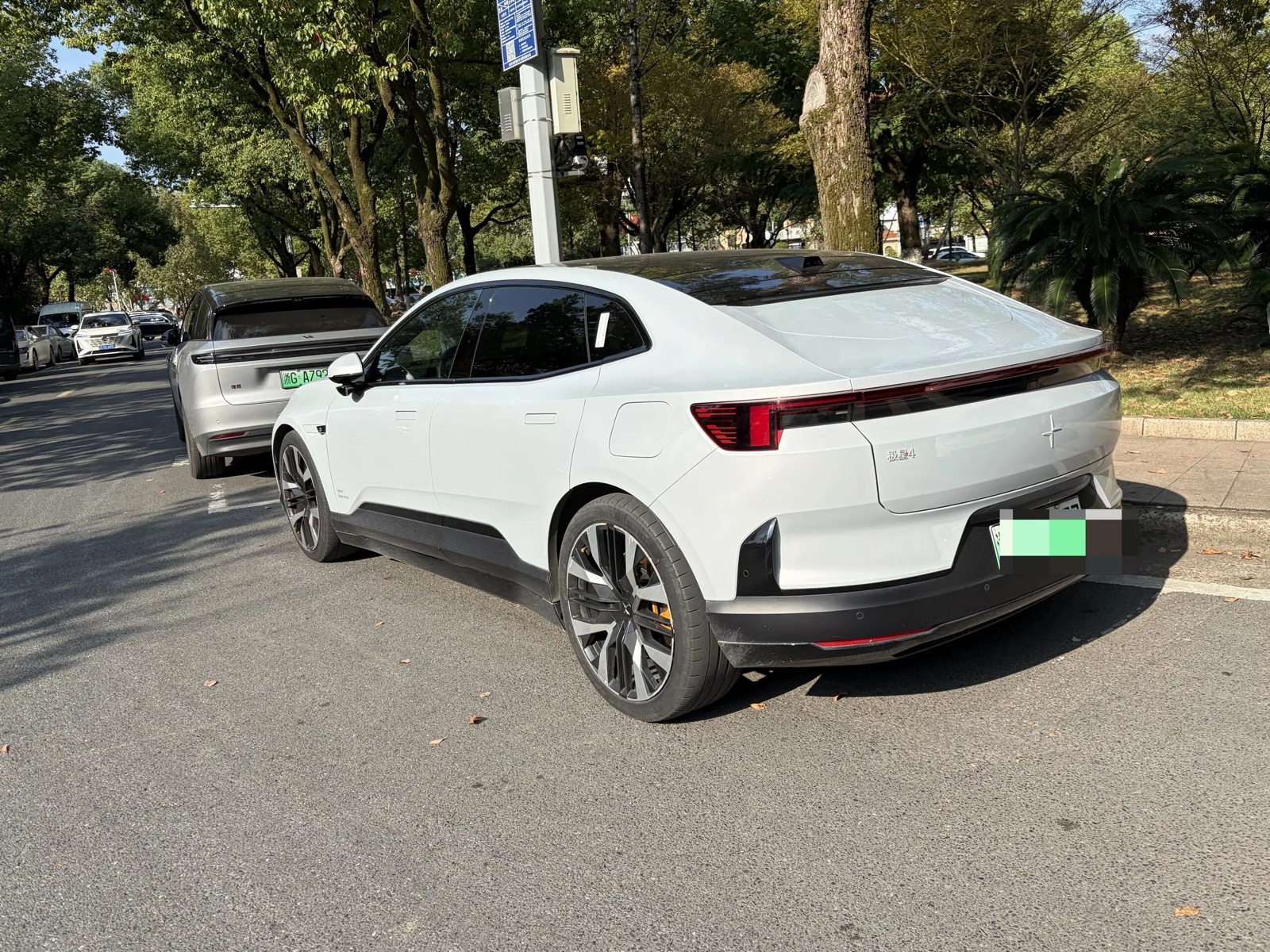
In one of my photos there is a second car in the frame: a silver Li Auto, one of the L-series. It is worth naming, because it is the counter-argument.
Li Auto built cars in the same price bracket, for the same buyers, with the same Chinese supply chain, and sold them in the hundreds of thousands — by designing for the specific demands of Chinese families: a fridge, a screen for the second row, a range extender so the car works on the drive to a village where the charger does not exist. It is not a more beautiful car than the Polestar 4. It is a car that answered the question the buyer was actually asking.
That is the whole lesson of the Polestar exit, and it is not really about electric cars. A brand with better design, better heritage and a bigger parent arrived in the largest market in the world, sold 69 cars in six months, and left. The market did not reject it for being foreign. It rejected it for being designed for a different customer and then priced as though it had not noticed.
I have written before about a Cadillac EV so rare my town has maybe five of them, about a Chinese EV that was discontinued 76 days after I bought it, and about why Evergrande built a car that only 1,429 people bought. The pattern is the same each time: the car is not the story. The arithmetic behind it is.
If a brand you liked stopped selling in your country tomorrow, would you keep driving the car — and would you buy another one used?
Sources: Polestar China store closure and 2025 H1 China sales of 69 units, Sina Finance and National Business Daily, October 2025; 2021–2024 China registration figures and model pricing history, Eastmoney and Ifeng Auto, October 2025; US Connected Vehicle Rule denial and 2027 model-year withdrawal, Polestar statement reported June 2026; H1 2026 financials including negative 8.5% gross margin and US$888m cash, company results reported September 2026; Polestar 2 and Polestar 4 cumulative global volumes, company Q3 2025 disclosure.