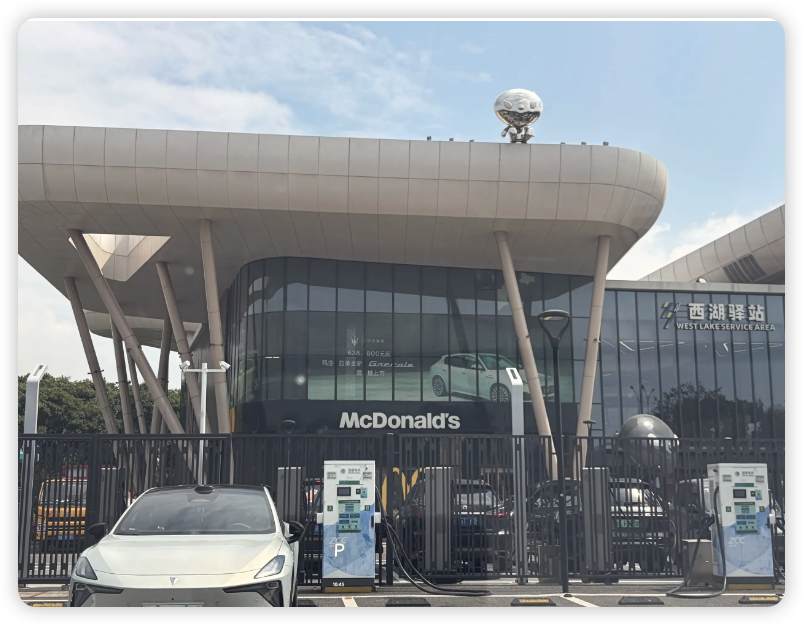
This weekend I drove to Hangzhou to pick up supplies, and somewhere on the way I pulled into the West Lake Service Area (西湖服务区) — a highway rest stop. From the outside, I genuinely could not tell it was a rest stop. It looked like a small shopping mall.
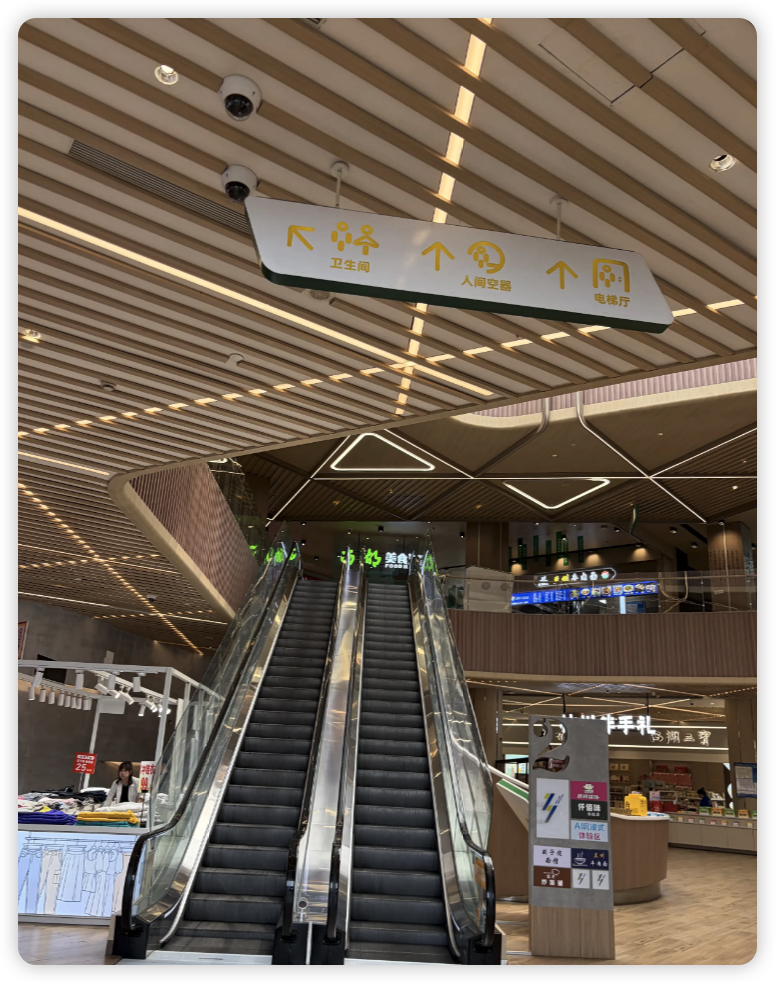
Inside, it has two floors. The layout isn’t the classic Chinese service area design either — the old model is “shops lining both sides, one central walkway, and a bathroom at the end.” This one felt like an actual commercial building. As someone from a county town, I felt like a country kid visiting the city for the first time.
But here’s what makes it more than a curiosity: Chinese highway service areas have quietly become one of the country’s most interesting retail formats — and comparing them to what a rest stop looks like in most other countries explains a lot about how China is built.
From Toilet Stop to Shopping Mall
For decades, a Chinese highway service area meant: parking lot, bathroom, convenience store, maybe a noodle stand. You stopped because you had to, not because you wanted to.
Then a shift happened — Zhejiang province (where I live) led a lot of it. Service areas started being rebuilt as full commercial complexes:
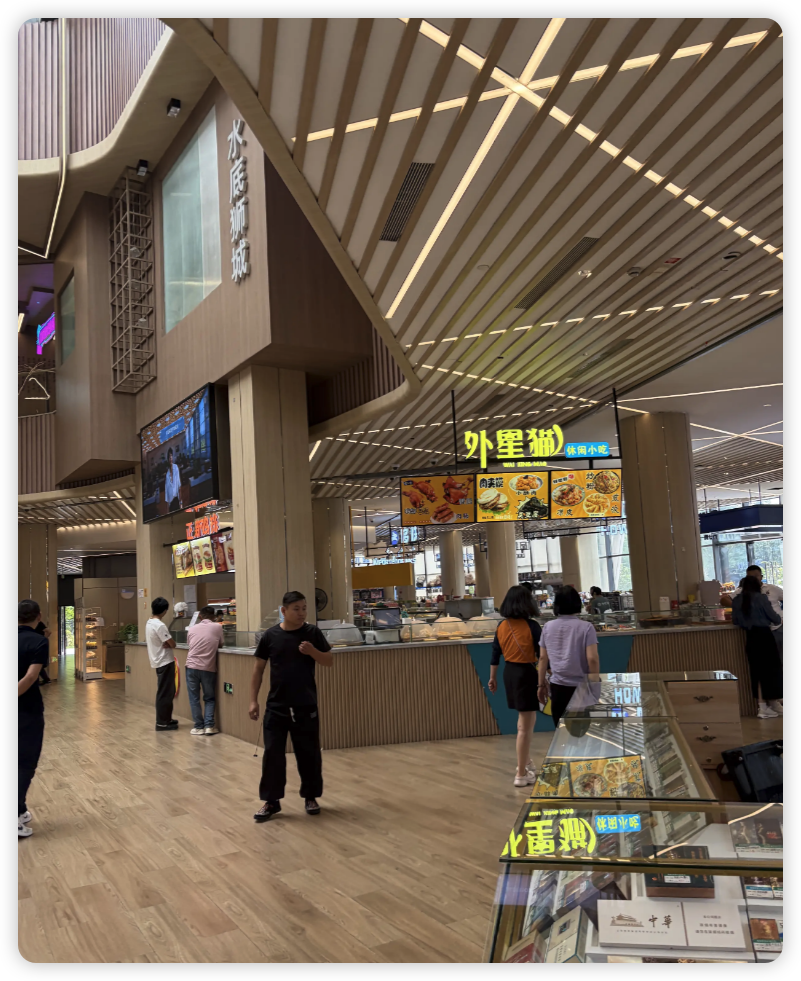
- Multiple floors, escalators, and food courts
- Chain coffee brands and regional restaurants instead of the one fried-noodle stand
- Local specialty shops — tea, silk, snacks from that specific city
- Clean, large restrooms, which is worth mentioning because it was historically the number-one complaint
Some of these upgraded service areas have become destinations people plan stops around. In the rest of the world, a rest stop is a bathroom and a vending machine. On a Chinese expressway, it can be a shopping trip.
Why China Invested in Rest Stops
Two reasons stand out:
1. Highway traffic exploded. China’s expressway network is the largest on earth, and long road trips became normal for hundreds of millions of people. Volume made the rest stop business viable.
2. Local governments compete with them. A service area is the first and sometimes only impression of a city for passing drivers. A good one can sell local products, promote local tourism, and create jobs. So provinces actively invested in making them impressive — which is why Zhejiang, Jiangsu, and Guangdong lead in this.
Meanwhile: The Self-Driving Part of the Trip
One more thing worth reporting from this drive: we took my girlfriend’s car — a Li Auto — and its assisted driving handled the highway surprisingly well.
Then you enter Hangzhou city, where roads get complicated — multiple lanes, bus lanes, confusing intersections, cameras everywhere. That’s where the system actually became more valuable for a different reason: it doesn’t get impatient. It tracks lane rules and speed limits more consistently than a human driver, and it reduces the chance of the kind of ticket I got last time I drove carelessly around a city. (I still caught my one waived fine earlier this year — lesson learned.)
The honest assessment: on highways, driver-assist is genuinely useful today. In dense city traffic, it’s still a co-pilot, not a driver — but the co-pilot part is already paying for itself.
FAQ: Chinese Highway Service Areas and Rest Stops
What are Chinese highway service areas like?
Modern ones are often full commercial complexes with two floors, food courts, chain coffee shops, local specialty stores, and large clean restrooms. The best are in Zhejiang, Jiangsu, and Guangdong.
How do Chinese rest stops compare to American ones?
American rest stops are usually simple: parking, toilets, vending machines, maybe a fast-food counter. Chinese service areas (服务区) are designed as commercial destinations, with a much wider range of food, shopping, and services.
Do Chinese highways charge tolls?
Yes, most Chinese expressways are toll roads. Tolls are calculated by distance and vehicle type, typically paid electronically via ETC (electronic toll collection) or by card at the exit.
Is driver assistance useful in China?
Yes, especially on highways — Chinese expressways are long, well-marked, and ideal for lane-keeping and adaptive cruise systems. In complex city traffic, assistance systems still require the driver’s attention.
Over to You
What’s the rest stop experience like where you live — a bathroom and a vending machine, or something bigger? And has a rest stop ever actually made you want to stop somewhere you weren’t planning to?
I’d love to hear what your country’s version looks like.
— Ying