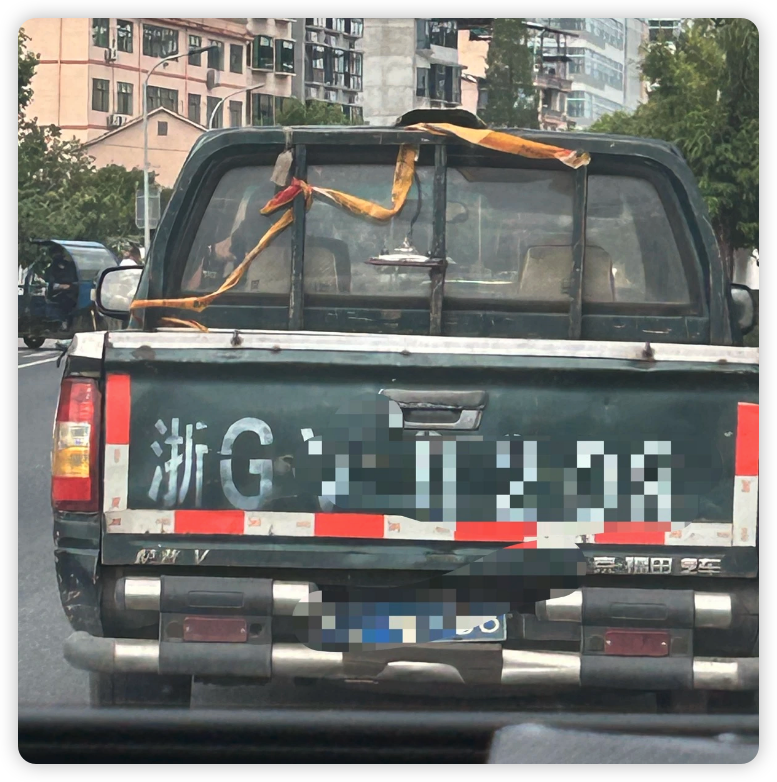
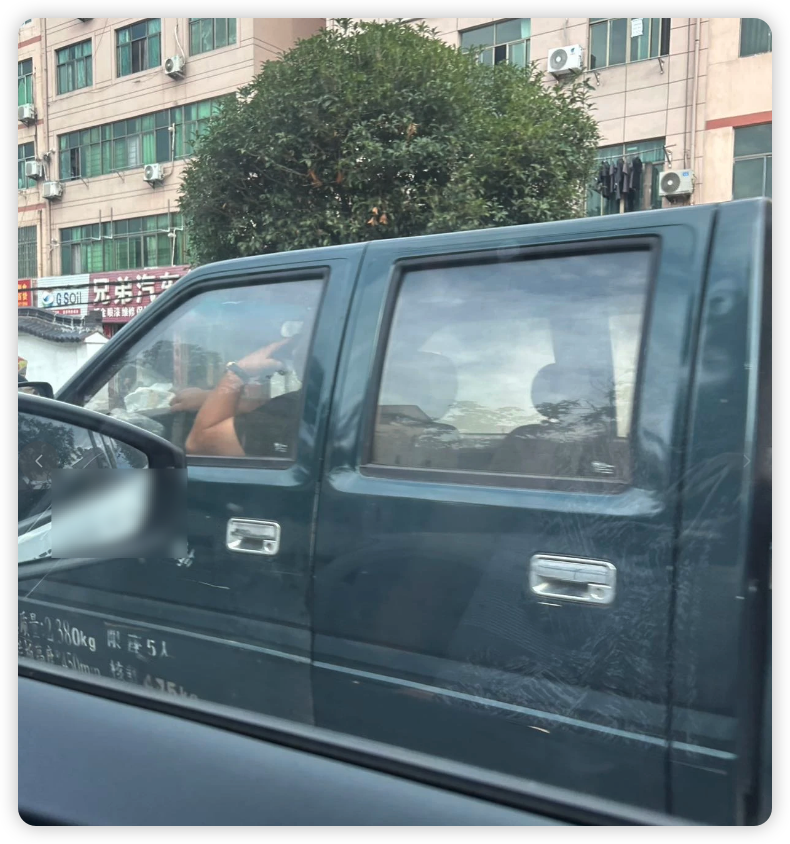
I was out running errands the other day when I spotted one: a JMC Baodian, parked by the side of the road. And just like that, I was back in 2005.
Because here’s the thing about this truck — in my town, between roughly 2000 and 2010, the JMC Baodian was the dream car of an entire class of people: the small business owners. Not the flashiest car. Not the fastest. But the one every practical-minded man with a workshop, a shop, or a delivery route actually wanted.
Now you hardly ever see one. So let me explain what made it so perfect for its time — and why China’s streets have forgotten it.
Why the Baodian Was the Perfect Truck for a County Town
Yongkang is a hardware town. Half the families here run some kind of small manufacturing or trading business: locks, tools, hardware parts, or a shop selling them. That means two needs, always in conflict:
- You need to haul things. Parts, tools, stock, deliveries.
- You also need to show up somewhere looking like a person, not a delivery boy.
For years, the answer to need #1 was the Wuling microvan — a legendary, dirt-cheap box on wheels that can carry anything. But here’s the problem with a Wuling: you look like you’re working when you drive it. Take your family out to dinner in a cargo van, and you feel it. It drives rough, sounds loud, and has all the comfort of a shipping container with seats.
The JMC Baodian solved both problems at once. It’s a proper pickup — a real cab, decent ride, actual presence on the road — with an open bed out back for cargo. You could load it with hardware in the morning and take your wife and kid to a restaurant in the evening, and neither felt wrong.
That’s why, in those years, the Baodian sat half a class above the Wuling in the local hierarchy of vehicles. Owning one said: I’m a business owner, and I’m doing all right.
A Truck With Japanese Bones
There’s a reason the Baodian looked and felt solid: JMC (Jiangling Motors) has partnered with Isuzu for decades, and the Baodian was built on that engineering lineage — essentially Chinese-market versions of proven Isuzu pickup designs. It launched around 2002, was priced at roughly 60,000–100,000 RMB (~$8,900–15,000), and became one of the best-selling pickups in China through the 2000s.
For a county-town buyer, that was the whole pitch: Japanese truck reliability, Chinese price, and the ability to work every day of the week.
So Why Did They Disappear?
This is the part that surprises people outside China. Pickup trucks aren’t unpopular in China because Chinese people don’t like them — it’s because the rules made them painful to own.
For most of the 2000s and 2010s, pickups were classified as commercial cargo vehicles in China. That classification brought a list of restrictions:
- City access limits — pickups were banned from many urban areas during daytime hours, in cities that let regular cars in freely.
- Faster mandatory retirement — as commercial vehicles they faced shorter service limits.
- Extra paperwork — operating permits, inspections, and restrictions that a normal passenger car never had to deal with.
So the Baodian’s owners were mostly people who needed a truck for work and accepted the trade-offs. As soon as they could afford a proper passenger car or SUV, they traded up — and the pickup’s practical advantage stopped justifying the hassle.
Then the market shifted entirely: today’s Chinese buyers want EVs with big screens, and the idea of a work truck as a status symbol has faded. (The old ones didn’t all get scrapped, though — plenty of Baodians are still working on farms and in small workshops, just far from the main streets.)
FAQ: JMC Baodian and Pickup Trucks in China
What is the JMC Baodian?
A pickup truck made by Jiangling Motors (JMC), launched around 2002 and built on Isuzu-derived engineering. It was one of China’s best-selling pickups in the 2000s, especially popular with small business owners.
Why are pickup trucks rare in China?
For years, Chinese regulations classified pickups as commercial cargo vehicles, which brought city access bans, shorter vehicle lifespans, and extra permits. Even though many cities have relaxed these rules since 2016, pickups remain far less common than in the US or Australia.
What was the Wuling Hongguang?
A tiny, cheap microvan/MPV from Wuling that became legendary in China for carrying enormous loads. It was the workhorse of small businesses — cheaper than a pickup, but far less comfortable as a family car.
How much did the JMC Baodian cost?
In the 2000s, the Baodian sold for roughly 60,000–100,000 RMB (about $8,900–15,000), making it an affordable step up from a microvan for small business owners.
Are pickups allowed in Chinese cities now?
Many cities have relaxed their restrictions since 2016, and more have done so in recent years. Rules still vary by city, so pickup owners need to check local regulations.
Over to You
Do you still see JMC Baodians (or any 2000s work trucks) where you live? And for readers outside China — is the pickup truck a family vehicle in your country, or still seen as a work tool?
I’d love to know how the same truck is treated differently around the world.
— Ying