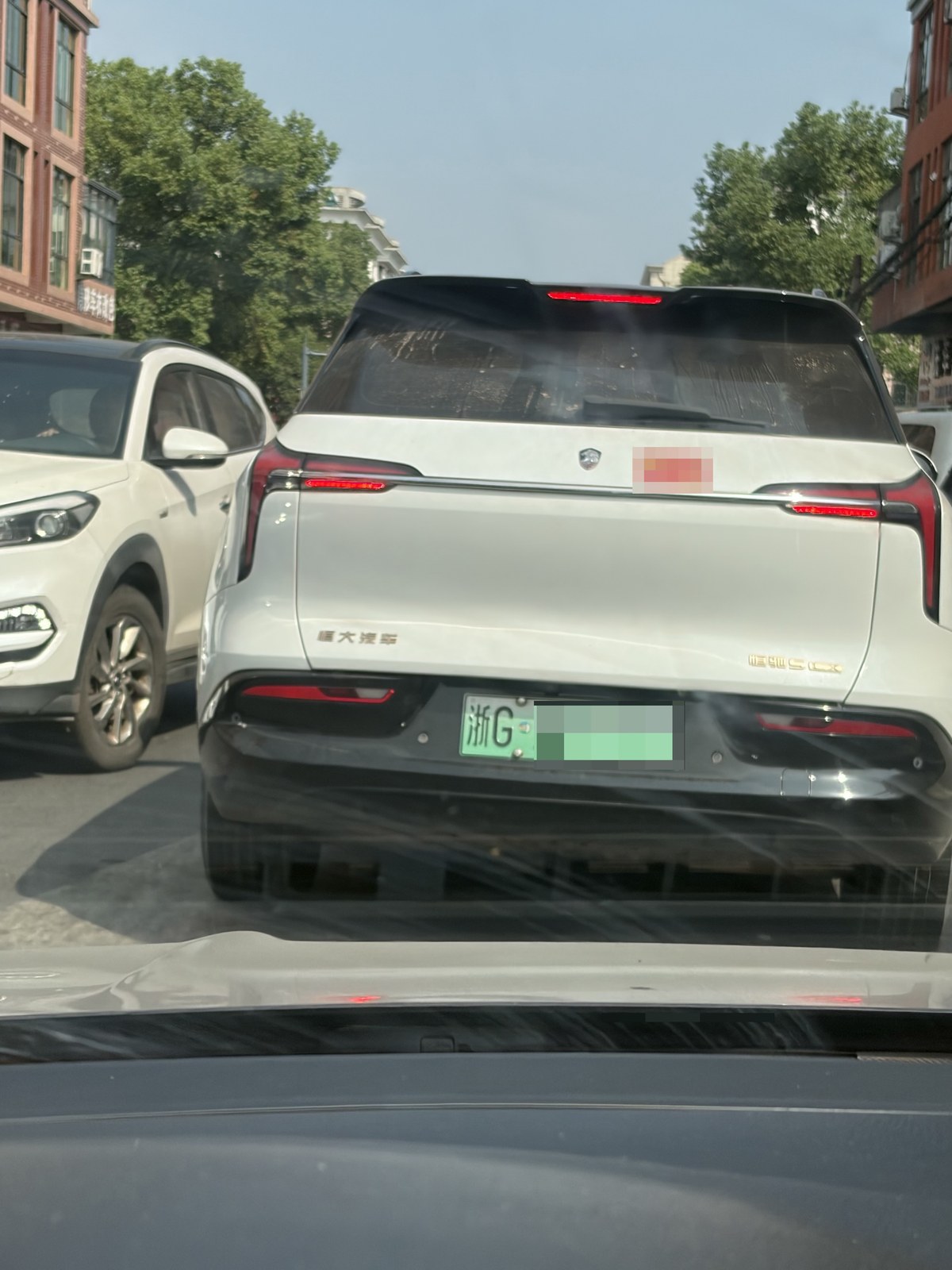
I was sitting behind a white SUV on an ordinary street in town, next to a supermarket, and I only looked at it properly because of the badge.
On the left of the tailgate, four characters: 恒大汽车 — Evergrande Auto. On the right, small gold lettering: 恒驰5 LX. Green plate, 浙G, which means it is registered right here in my city.
Short answer: Evergrande treated cars the way it treated land — buy the technology, build the plant, announce the numbers — and the money ran out before the product did. It spent about ¥47.4 billion (roughly $7 billion) on the car business, built around 1,700 cars, delivered 1,429, and by June 2026 had ¥205,000 left in the bank against ¥32.7 billion of debt.
So the reason only 1,429 people bought one is not that 1,429 people wanted one. It is that the company collapsed while the car was still being figured out.
First, What Even Is This Thing?
The Hengchi 5 went on sale on 6 July 2022. One trim, one price: ¥179,000 — about $26,500 at today’s rate.
On paper it was a perfectly ordinary compact electric SUV:
| Size | 4,725 mm long, 2,780 mm wheelbase |
| Motor | single front unit, 150 kW / 204 hp, 345 Nm |
| 0–100 km/h | 7.8 seconds |
| Battery | 72.8 kWh LFP, CATL |
| Range | 602 km CLTC |
| Screens | three — 10.25-inch cluster, 14.6-inch centre, 10.25-inch passenger |
| Driver assist | L2.5 |
| Warranty | lifetime, whole car plus powertrain, first owner only |
The launch came with a sales gimmick I had genuinely never seen before or since: you paid the money into a notary’s escrow account, the factory only got paid when you took the car, and you could return it within 15 days for a full refund. In 2022 that was a remarkable thing to promise. It tells you exactly how hard these cars were to sell.
The company’s own target was 10,000 deliveries in the first quarter of 2023. The real lifetime total, for the whole production run, was 1,429.
Rarer Than a Rolls-Royce, and I Mean That Literally
Here is the number that made me stop and photograph a stranger’s car.
From the start of deliveries in October 2022 to the last disclosure on 30 June 2024, Evergrande Auto delivered 1,429 vehicles. That is roughly 238 a year.
Rolls-Royce delivered 675 cars in China in 2025 — and that was a 2% increase.
So a Hengchi 5 is about 2.8 times rarer on a Chinese road than a Rolls-Royce. In the first four months of 2025 the nationwide retail figure for the model was five cars. Not five thousand. Five.
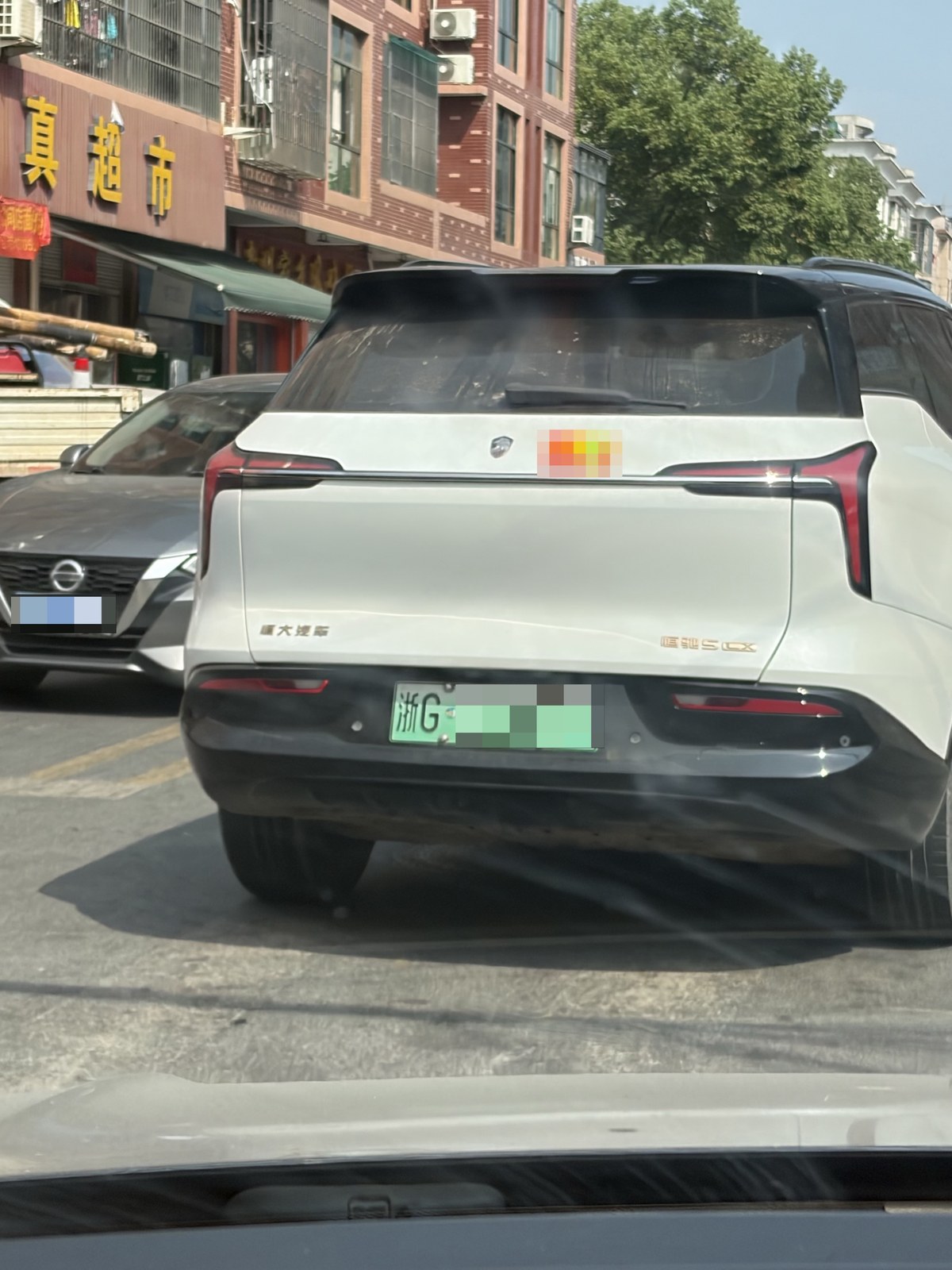
And the factory side is stranger still. The Tianjin plant built roughly 1,700 of them. Most of those never found a buyer at all — they were built, parked, and written down. Production at Tianjin stopped in January 2024 and never restarted.
Which is why, when I saw one moving under its own power on a Tuesday afternoon, it felt less like spotting a car and more like spotting a museum piece that had escaped.
¥47.4 Billion, Divided by 1,429
Now the part that doesn’t add up, until you remember who was doing the accounting.
Evergrande Auto’s own disclosure put cumulative investment in the car business at ¥47.4 billion — about $7 billion. Of that, ¥24.9 billion went on acquiring core technology and R&D, and ¥22.5 billion on plants and equipment.
Divide ¥47.4 billion by 1,429 delivered cars and you get roughly ¥33 million — about $4.9 million — per car that reached a customer.
Cumulative losses by the end of 2023 had already passed ¥110.8 billion. In 2021 the company’s market value was reported above ¥700 billion, which for a while made a carmaker with no cars one of the most valuable industrial companies in the country.
The 2026 interim report is the arithmetic finally catching up:
| As of 30 June 2026 | |
|---|---|
| Total assets | ¥182 million |
| Total liabilities | ¥327.22 billion |
| — of which borrowings | ¥162.83 billion |
| — of which trade and other payables | ¥164.39 billion |
| Cash and equivalents | ¥205,000 |
| Employees | 7 |
Seven people. Staff costs for the half year: ¥1.4 million. The company that once promised one million cars a year by 2025 now employs fewer people than a convenience store.
What Happened After the Cars Stopped
The unwinding happened in pieces, which is why the balance sheet shrank so fast without anyone paying anything off.
- Shanghai Hengchi went into bankruptcy liquidation in March 2025.
- Two core Guangdong subsidiaries finished restructuring, and their equity went to a Guangzhou state-owned entity for no cash consideration.
- The Tianjin manufacturing subsidiary had a bankruptcy liquidation accepted in November 2025.
- The parent, Evergrande Auto, confirmed in its 2026 interim report that it has exited car manufacturing entirely.
What is left is a Hong Kong head office, a Swedish subsidiary called NEVS, and ¥174 million of “intangible assets” — mostly proprietary technology for batteries and car manufacturing that nobody is paying for. Technical service revenue for the period: zero.
The new business is lithium battery trading. Buy cylindrical and prismatic cells from Chinese cell makers, sell them to small overseas customers in e-bikes, power tools, storage and small appliances. Revenue in the first half of 2026, from the business’s very first sale: ¥8.725 million, at a gross margin of 5.98%. Gross profit: ¥522,000.
The company reported a net profit of ¥186 million for the half year, which sounds like a turnaround until you read the note. ¥554.6 million of it was a foreign exchange gain on its borrowings — a paper gain from the yuan moving, with no cash coming in. Strip that out and the operating loss was over ¥360 million.
On the listing: the shares have been suspended since 1 April 2025. Under the exchange’s rules, an 18-month suspension period allows the listing to be cancelled, and that window closed on 30 September 2026. The listing division can now recommend cancellation. As of late October 2026 the shares are still suspended, at zero.
Meanwhile, 1,429 People Still Own One
This is the part I keep thinking about, because it is the part with people in it.
Those 1,429 owners bought a car from a company that no longer makes cars. What that means in practice: the dealer network is essentially gone, spare parts are no longer supplied, the connected services that ran through the factory are offline, and even renewing insurance has become difficult. The lifetime warranty on the whole car and the powertrain — a promise that was genuinely unusual in 2022 — now has nobody behind it to honour it.
And the resale value tells you what the market thinks of all that. A 2023-registered Hengchi 5 went through an online auction at ¥53,800 — about $7,970, or roughly 30% of the ¥179,000 it cost new.
A car that sold for ¥179,000 with a lifetime warranty, now worth ¥53,800 with no warranty at all. That is the whole collapse, in one price.
But then look at the photo again. White body, black roof, the full-width light bar lit up, a small flag sticker still on the tailgate. Clean paint. It was in traffic, doing exactly what cars do.
Why This One Matters to Me
I write about this town because it is where national stories turn into ordinary objects. Evergrande is a name that people outside China know from the property crash — the unfinished towers, the debt, the trials. What almost nobody outside China knows is that the same company also built cars, and that 1,429 of them are still out there being driven.
One of them is in my city, on a street I drive down most weeks.
That is the thing about a county town of 620,000 people. Nothing stays abstract here for long. A ¥327 billion balance sheet becomes a white SUV waiting at a junction, with a supermarket behind it and someone’s shopping in the back.
FAQ: The Evergrande Hengchi 5
How many Hengchi 5 were actually built?
About 1,700 left the Tianjin plant, and 1,429 were delivered to customers as of 30 June 2024. Production stopped in January 2024. Most of the rest were never sold.
Can you still buy one?
Only secondhand. There is no factory, no dealer network and no new-car supply. Auction and resale prices sit far below the original ¥179,000 — one 2023 car sold for ¥53,800.
Is Evergrande Auto still listed?
Technically yes, but the shares have not traded since 1 April 2025. The 18-month suspension window closed on 30 September 2026, which lets the exchange’s listing division recommend that the listing be cancelled.
Was the Hengchi 5 a bad car?
On the spec sheet it was mid-pack for ¥179,000 in 2022: 602 km of CLTC range, a 72.8 kWh CATL battery, three screens. What killed it was never really the car. It was that the company behind it ran out of money, and a car is only as good as the network that keeps it running.
What does 恒驰 mean?
Hengchi — 恒 (everlasting) plus 驰 (gallop). The parent company’s name, 恒大, uses the same first character: “everlasting greatness.”
Where I Got These Numbers
- 2026 interim results: assets ¥182 million, liabilities ¥327.22 billion, cash ¥205,000, battery trading revenue and the ¥554.6 million FX gain — Sina Finance, 17 September 2026
- 1,700 built and 1,429 delivered as of 30 June 2024 — National Business Daily, August 2024
- ¥47.4 billion invested, exit from car manufacturing, and the Tianjin halt — Tencent News, 17 September 2026
- Five retail sales in the first four months of 2025 — Youjia
- Rolls-Royce China deliveries of 675 units in 2025 — Pacific Auto
- The 30 September 2026 delisting deadline under the 18-month suspension rule — AASTOCKS filing coverage
- Currency converted at ¥6.75 to the US dollar, October 2026
Over to You
Have you ever seen a Hengchi 5 in person? If you own one — or know someone who does — I would genuinely like to know what it is like to keep one running now that the company has walked away.
And for everyone else: what is the rarest car you have ever seen on a normal street, not at a show?
— Ying